
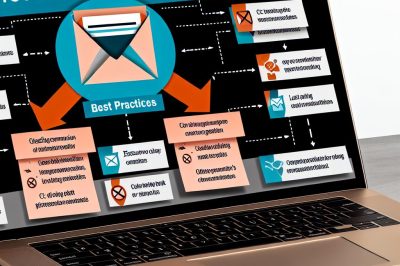
Email Chains: An Overview
Email chains are a common occurrence in modern workplaces, typically originating from a simple need to communicate updates or to seek feedback. Despite their benign beginnings, these chains can rapidly evolve into sprawling threads that clutter inboxes and obscure important information. It can be overwhelming for participants as everyone replies to all, forwards messages, or introduces new topics. This not only affects individual productivity but can also obscure critical content and decision-making. For more efficient communication, it’s vital to understand how to manage and reduce unnecessary email chains effectively. Here, we will explore several practical strategies designed to tackle this ubiquitous challenge.
Use Direct Messaging for Quick Conversations
One practical approach is to utilize instant messaging platforms such as Microsoft Teams or Slack. These tools are adept at handling real-time communication and can serve as a suitable substitute for email, especially when swift dialogue is essential. Direct messaging platforms enable quick exchanges, where people can see when messages are read and typing responses occur in real time. This immediacy is often absent in email communication, which tends to create delays due to its less dynamic nature.
Establish Clear Communication Guidelines
Another fundamental strategy is the establishment of robust communication guidelines within an organization. These guidelines should encompass email etiquette and define explicit protocols on when to use email, how to compose messages effectively, and when alternative communication should be employed. By disseminating these guidelines among team members, organizations ensure that communication remains efficient and purposeful.
Create a Dedicated Email Thread
Fragmented discussions across various email threads can hinder the flow of information. To combat this, consolidating related topics into one cohesive email thread is beneficial. Ensure that each email thread is equipped with a clear and informative subject line, precisely aligned with the conversation’s objective. This practice significantly reduces the likelihood of information becoming scattered and helps maintain a concise record of discussions.
Use Collaborative Tools
Collaborative tools play a pivotal role in streamlining communication. Instead of exchanging multiple emails with updated files as attachments, platforms like Google Docs or Microsoft Excel can be effectively used to facilitate synchronous collaboration. Sharing a direct link to a collaborative document allows all participants to make real-time contributions and access the latest information, significantly reducing the volume of email ping-pong.
Summarize Email Chains Early and Often
As email chains commence and develop, frequent summarization of the ongoing discussions is crucial. Summarizing discussions can greatly minimize the need for each participant to sift through the entire chain, allowing them to quickly understand the main points and conclusions. This practice can also help in trimming down unnecessary replies that often arise due to misunderstandings or lack of context.
Limit the Number of Recipients
To prevent email chains from ballooning unnecessarily, it is prudent to limit the number of recipients. Participants in any given email should be those directly involved in the discussion. Doing so minimizes extraneous replies and maintains focus on the conversation. For those who need updates, a summarized report catering to the relevant parties can be more impactful than including everyone in the thread from the start.
Conduct Regular Email Audits
Email practices should be periodically reviewed through audits to ensure the communication remains efficient. Team members should be encouraged to provide feedback on the existing communication processes. Such feedback can illuminate persistent issues related to email chains and pave the way for the refinement of communication strategies and guidelines.
By implementing the strategies mentioned, organizations can drastically improve communication efficiency and diminish the clutter associated with unwieldy email chains. This transformation leads not only to more streamlined processes but significantly enhances productivity. In today’s rapid-paced work environment, minimizing such digital clutter is a step towards fostering more focused and effective communication practices. As teams adapt to these changes, the altered dynamics will contribute to greater overall workplace efficiency and satisfaction, as communication barriers are effectively dismantled, paving the way for smoother collaboration.