
Introduction
Building an effective daily email routine is crucial for enhancing productivity and ensuring effective communication in both personal and professional spheres. It’s easy to become overwhelmed by the sheer volume of emails received each day, leading to missed opportunities and inefficiencies. This article offers insights into establishing a robust routine to manage your emails more effectively. By exploring each facet of email management, you can enhance your control over your inbox and ensure you never miss out on essential correspondence.
Explore more productivity resources here for tools and ideas to further refine your email management practices.
Understand Your Email Traffic
The foundation of a good email routine starts with recognizing the volume and nature of the emails you receive regularly. Each email can generally be categorized into different types, such as:
- Personal emails, which come from friends or family
- Work-related emails, which involve coworkers or professional contacts
- Newsletters from organizations or services you have subscribed to
- Spam or unwanted emails that clutter your inbox
By identifying which emails belong to which category, you acquire a more structured approach to handle them. This categorization is key to prioritizing your attention and managing your emails effectively.
Set Specific Times for Checking Emails
Email notifications can be an enormous distraction if checked continuously throughout the day. A more efficient approach is to designate specific times for focusing on your inbox.
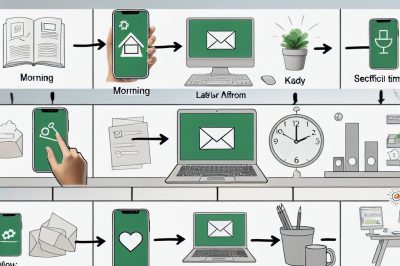
Begin your day by scanning your emails in the morning to quickly address urgent matters. Determining at least one or two additional time slots, such as midday and late afternoon, will allow you to read and respond without breaking the flow of other critical tasks. With this structured timing, you minimize distractions and focus better on email management when it matters.
Organize Your Inbox
An organized inbox leads to a clearer mind. Utilize tools provided by your email client to maintain order. Folders and labels are prime ways to categorize messages effectively. Examples of helpful categories include Work, Personal, and Newsletters.
To streamline this process further, employ filters to automatically channel incoming emails into their designated folders or apply labels. Most email providers offer robust filtering options, and checking their help section or online guides could be beneficial in setting up these automated processes.
Stay On Top of Unread Emails
Unread emails can quickly pile up, leading to a daunting and disorderly inbox. Keep this in check by regularly deleting or archiving emails that no longer require immediate attention. Flag emails of significance that necessitate a response or are essential for future reference. This proactive step ensures that you maintain a finger on the pulse of critical information without getting bogged down by lesser content.
Reply Promptly to Important Emails
Being responsive not only reflects well in professional environments but is also crucial in maintaining effective communication channels. Strive to address important emails that demand a reply within one business day. This discipline fosters better relationships with clients and coworkers and enhances trust in your reliability and efficiency.
Minimize Newsletter Subscriptions
In a digital age swarming with information overload, evaluate the relevance of each newsletter subscription critically. If a newsletter does not contribute to your personal interests or professional growth, unsubscribe. By doing so, you optimize your inbox for more meaningful interactions and reduce unnecessary congestion.
Use Technology to Your Advantage
Leverage technology to refine and enhance your email handling practices. Numerous tools offer smart filtering and management capabilities. Similar to filters, email clients often support smart filtering extensions and productivity tools that can automate several aspects of email management, thus saving time and enhancing efficiency. By utilizing these technological aids, you gain additional control and ease in managing email correspondence.
Conclusion
Crafting and maintaining an efficient email management routine is an indispensable part of modern-day productivity. It requires consistency, strategy, and occasionally, the right technological aid. By thoroughly understanding your email composition, setting structured times for inbox management, organizing your messages effectively, and leveraging technological solutions, you enhance your productivity and responsiveness. This structured approach to email management enables you to better navigate the digital communication realm.
For additional resources and tools to help improve productivity across various aspects of your daily routine, consider visiting Productivity Tools for comprehensive tips and strategies.