
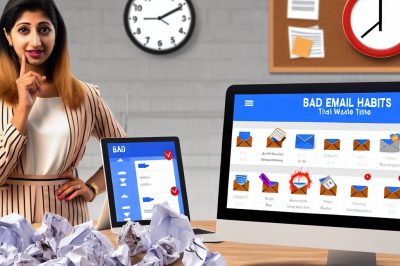
Understanding the Impact of Bad Email Habits
The modern workplace is heavily reliant on email communication, a tool that, when used properly, can significantly enhance productivity and communication efficiency. Unfortunately, poor email habits prevalent amongst professionals can lead to significant time wastage, miscommunication, and even the loss of crucial opportunities. Recognizing such negative habits is the first step towards their rectification, which can ultimately lead to a more productive and efficient work environment. For a more comprehensive understanding, additional resources such as The Balance Careers can provide further insights.
Common Bad Email Habits
Checking Emails Too Frequently
It is a common scenario for professionals to feel tethered to their inbox, constantly monitoring it for new messages. This habit, fueled by the fear of missing important information, can become a major distraction from other critical tasks that require focused attention. To minimize interruptions, it is vital to understand when it is necessary to temporarily disconnect from your inbox for higher-priority activities.
Using Overly Long Email Threads
Email threads that become excessively lengthy can be a source of confusion and anxiety. With extensive threads, recipients may find it challenging to locate the key information embedded within numerous conversation turns. This not only wastes time but also increases the possibility of misunderstandings. To avoid this, it’s advisable to maintain concise communication, focusing on essential details and removing any extraneous dialogue.
Inefficient Subject Lines
The subject line of an email is the gateway to the message’s content. If it lacks clarity or is vague, the email runs the risk of being overlooked, ignored, or pushed aside for later reading. It is essential that subject lines succinctly convey the purpose of the email, enabling recipients to quickly assess its importance and prioritize their responses accordingly.
Strategies to Improve Email Management
Schedule Email Time
One effective practice is to allocate specific times during the day dedicated to managing emails. By concentrating your email activities into distinct periods, you can minimize random disruptions throughout your day and allocate your undivided attention to more pressing tasks in between.
Utilize Email Filters
The majority of email platforms come equipped with robust filtering options. These can be harnessed to direct lower-priority emails and newsletters into specific folders. Such a system allows you to prioritize addressing critical communications while non-urgent messages can be reviewable at a more convenient time.
Adopt Brief and Clear Communication
Aiming for brevity without sacrificing clarity plays a crucial role in efficient email management. Start your email by clearly stating its purpose to eliminate unnecessary back-and-forth exchanges. Bullet points can be helpful in presenting essential details concisely, facilitating better understanding for recipients.
Using Tools and Techniques to Enhance Efficiency
Explore Email Management Tools
Numerous tools exist specifically for enhancing email productivity. From automated categorization to prioritization based on importance, these tools can greatly aid in managing overwhelming inboxes. They provide valuable functionalities, reducing the manual effort required for efficient email handling.
Consider Unsubscribing
A cluttered inbox is often the result of numerous subscriptions to newsletters and alerts, which over time may have outlived their usefulness. By unsubscribing from these redundant communications, you can significantly decrease the volume of emails received, hence making your inbox more manageable.
Creating Templates
For recurring types of emails, such as routine status updates or standard responses, creating templates ensures both time efficiency and consistency. This also reduces the likelihood of missing important information that should be included in such communications.
Long-term Benefits of Improved Email Habits
Enacting better email habits does not only result in immediate improvements, like saving time and reducing stress, but it also cultivates a more organized and manageable inbox over the long term. This systematic approach to email management facilitates clearer communication, enhances professional relationships, and boosts overall productivity. Moreover, reducing email-related stress contributes positively to mental health, allowing professionals to focus more intently on their core responsibilities.
In summary, by adopting disciplined email habits, individuals can navigate their professional duties with greater efficiency and less stress. By integrating the strategies mentioned above, you can transform your email management practices and develop a streamlined routine that supports, rather than hinders, your professional success. For a deeper dive into optimizing email practices, consider exploring expert resources that offer detailed advice and innovative solutions.