
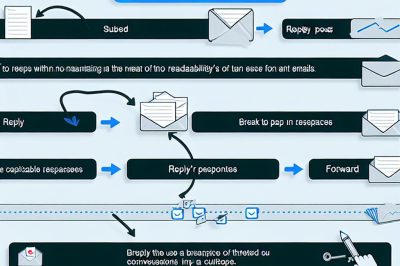
Understanding the Importance of Clean Email Threads
In today’s digital world where communication is often conducted through emails, managing email threads effectively has become increasingly important. As individuals and businesses consistently exchange emails, the ability to maintain a clear and organized email communication can prevent misunderstandings and foster more effective interactions. This article will delve into the significance of maintaining clean email threads, along with practical strategies to achieve this.
Organize with Effective Subject Lines
One of the easiest ways to start ensuring clarity in your emails is by using a strong and effective subject line. A good subject line acts as a preview of the email content and gives the recipient a clear idea of the email’s purpose. Moreover, it aids in searching and organizing past conversations, especially when dealing with a substantial amount of emails each day.
Crafting Descriptive Subject Lines
To craft a descriptive subject line, it’s important to be specific about the purpose of your email. For instance, instead of a vague subject like “Meeting,” consider using “Agenda for Marketing Meeting on April 10.” This specificity aids recipients in prioritizing their emails and preparing adequately. When the focus of the email conversation shifts, consider modifying the subject line to mirror this change. Although it may seem like a minor adjustment, it has substantial benefits in enhancing the comprehensibility of your email threads.
Utilize Clear Formatting
Clear formatting is crucial in making your emails readable and visually appealing. Proper formatting can make a significant difference in clarifying your message by helping the recipient to quickly grasp the key points without getting lost in text.
Consistent Font and Size
Make it a point to use a consistent font and size throughout your email communications. Disparate fonts and sizes can distract or confuse the reader, detracting from the message’s clarity. While creative uses of colors and styles might stand out, overdoing them can be counterproductive. Therefore, maintaining a clean and professional look is essential for effective communication, keeping the focus on the content rather than the presentation.
Maintain Conciseness
Being concise with your emails can not only save time but also ensure that the necessary information is clearly conveyed. Long-winded emails tend to hide important points amidst unnecessary details, potentially leading to oversights or misunderstandings.
Prioritizing Information
In your email, lead with the most critical information, then follow with supporting details. By doing this, even if the recipient skims through the email, they will grasp the essential parts. If further information is needed, consider attaching relevant documents or providing links to external resources. This not only reduces the email’s length but also empowers the recipient to delve deeper if needed.
Reply Appropriately
How you respond to emails significantly impacts the thread’s clarity and continuity. Each reply should be pertinent and contribute value to the existing conversation. Avoid including superfluous content from earlier exchanges, as this can unnecessarily extend the email thread.
Quoting Wisely
When quoting material from previous emails, ensure that you quote only the parts necessary for context. Oversharing from past emails can clutter the current message, confusing the dialogue. Conversely, quoting strategically aids recipients in understanding the conversation’s flow without having to scroll through old emails.
Designate a Thread Manager
In professional environments, designating someone to manage email threads can be highly beneficial. This person can oversee the conversation, ensuring it remains focused and relevant. Thread managers can also summarize ongoing discussions, making it easier for everyone involved to comprehend key points and action items.
Consolidating Information
An effective thread manager is adept at summarizing complex email threads into precise, cohesive updates. This approach keeps participants informed without needing to sift through multiple lengthy emails. Consolidating information is especially useful in situations involving numerous stakeholders, allowing for seamless communication and comprehension.
Conclusion
The approaches discussed above, when implemented effectively, can significantly improve email communication by maintaining clean and organized email threads. By enhancing readability and clarity, these strategies boost efficiency and convey a professional image. Properly maintaining email threads not only aids in swift information retrieval but also reflects a commitment to structured and considerate communication. Such dedication to organization leaves a positive impression on both personal and professional correspondents alike, facilitating better understanding and collaboration in any setting.