
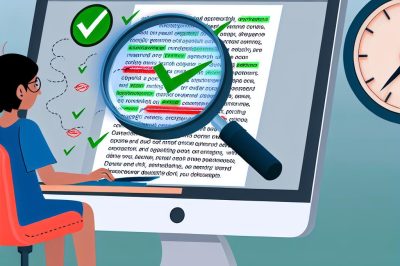
Importance of Proofreading Emails
Proofreading emails is an essential step often overlooked in the realms of both personal and professional communication. An error-free email is not just a reflection of your attention to detail but also a vital component of maintaining professionalism and clarity. Communication is the backbone of any business interaction, and mistakes in emails can easily lead to misunderstandings, negative impressions, and at times, even costly errors. Utilizing efficient proofreading techniques can help you catch these mistakes quickly, ensuring your message is delivered as intended. For more in-depth strategies, explore resources on effective email writing.
Focus on Common Errors
When proofreading, the key is to focus on common errors that frequently appear in emails. These include spelling mistakes, grammatical errors, and punctuation issues. Identifying and correcting these errors can significantly elevate the overall quality of your correspondence. Most email platforms today come equipped with built-in spell check features, which can be a valuable tool for catching spelling errors swiftly. However, relying solely on automated spell checkers is not enough, as they can miss context-specific errors that a careful read-through would identify.
Your primary focus should be on grammatical correctness, ensuring that verb tenses are consistent, subjects and verbs agree, and sentences follow logical structures. A well-structured email not only reads better but also ensures that your message is clear and concise to the recipient. Take note of punctuation, paying attention to the correct use of commas, periods, and other marks, as they help in delineating the flow of your message.
Read Aloud for Clarity
Reading your email aloud is an effective proofreading technique that can significantly enhance clarity. This method enables you to catch awkward phrasing, missing words, and overly complex sentences that might be harder to identify when reading silently. By engaging in this exercise, you are compelled to slow down and consider each word carefully, thereby increasing your chances of spotting errors.
The process of vocalizing your message creates a distinct cognitive engagement with the text, revealing issues that might not be apparent on a visual read-through. It also aids in ensuring that the email’s tone matches its intended purpose, be it formal or informal, helping in delivering an appropriate message to the recipient.
Use Online Tools
In the digital age, several online tools can assist in the proofreading process. Applications like Grammarly or Hemingway Editor serve as excellent allies in identifying grammatical issues and enhancing readability. These tools provide suggestions that can help refine your writing. However, it is crucial to review these suggestions meticulously, as automated systems may not always offer the best advice given the nuances and context of each email.
Employing online tools should be complemented by personal judgment. These applications are continuously improving, but their suggestions are not infallible. It’s essential to use them as a guide rather than a definitive solution, applying your knowledge to discern which tips to adhere to and which to overlook.
Take a Break
A practical yet simple strategy is to take a break before proofreading your email. If time permits, stepping away from your draft even for a short period can provide you with a fresh perspective, helping you spot mistakes with a clearer mind. The mental distance gained during this break can be invaluable in noticing errors that might have been overlooked initially due to familiarity with the text.
When returning to the draft with renewed focus, you are more likely to identify inconsistencies, awkward expressions, or lapses in logic that compromise the email’s clarity and effectiveness. This practice can prevent errors that occur when you are too absorbed in the writing process.
Check for Consistency
Ensuring consistency throughout your email is another critical proofreading step. Consistency in elements like font type, size, and color maintains a professional appearance. Discrepancies in formatting can distract the reader and detract from the message’s perceived professionalism. Additionally, maintaining a consistent tone and style throughout the email enhances its readability.
Apart from visual consistency, it’s essential to verify that hyperlinks included in your email are functional and direct the reader to the intended pages. Faulty links can lead to significant misunderstandings and reflect poorly on your attention to detail.
Verify Names and Dates
One of the simplest yet most crucial proofreading tasks is the verification of names and dates within your email. Misstating these details can dramatically change the recipient’s understanding and can undermine your credibility. Double-check that all names are correctly spelled and that dates correspond accurately to the intended timeline. This step is particularly crucial in professional settings where accuracy is paramount.
Ensuring the accuracy of such specifics contributes significantly to the professional impression communicated by the email and reduces the likelihood of errors that could lead to confusion or adverse outcomes.
Conclusion
In conclusion, efficiently proofreading emails is pivotal in maintaining professionalism and clarity in communication. By targeting common errors, utilizing online tools, and employing techniques like reading aloud, individuals can quickly detect and rectify mistakes, thereby improving the overall quality of their emails. Adopting these strategies not only aids in accurate and effective communication but also fosters a reputation for attention to detail and professionalism—a hallmark of successful communication in any realm.