
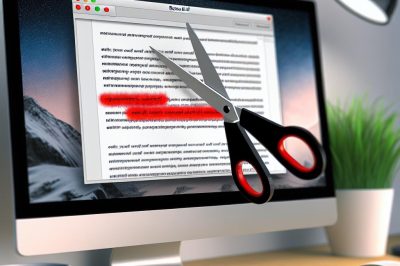
Understanding Email Fluff
In the ever-growing reliance on digital communication, email stands as a cornerstone of professional interactions. However, its vast usage doesn’t always translate to effective communication. A common hurdle is the inclusion of what some refer to as “email fluff.” This refers to the unnecessary words or phrases that clutter the message without adding any real value. Addressing email fluff involves refining your communication skills to ensure your emails are not only clear and concise but also more effective in conveying the intended message. This practice not only saves time for the recipient but enhances the professionalism of your communication.
Identify the Core Message
The very first step before your fingers even reach the keyboard is to ask yourself what’s at the heart of your message. Determining the main purpose of your email ensures that you focus on what’s important and remove any information that doesn’t serve that purpose. By maintaining a laser focus on the core message, you prevent the intrusiveness of irrelevant data, consequently making your communication streamlined and effective. The core message is the backbone of your email; without it, your message risks becoming a tangled web of words.
Avoid Redundant Phrases
Every industry has its share of common phrases peppered throughout communications. Phrases such as “just a quick note to let you know” or “I hope this email finds you well” can often serve as pleasantries, but they may not always be necessary. While it’s polite to acknowledge the recipient, consider whether such niceties may dilute the directness of your message. Being straightforward often does not compromise the relational warmth or politeness. Craft your message to swiftly lead to the point; this approach respects the reader’s time and enhances message clarity.
Use Bullet Points for Clarity
Complex information can be unraveled and simplified using bullet points. When you find yourself needing to convey several pieces of information or steps, bullet points are a useful tool. Although caution is warranted to avoid excessive listing, a strategic placement of bullet points categorically organizes information, enhances clarity, and maintains brevity. They serve not only as a tool for organizational clarity but also help dissect complex messages into digestible chunks. Make the information user-friendly, and the likelihood of engagement and response rate may increase.
Opt for Stronger Verbs
Language is powerful, and the verbs you use can have a significant impact on the strength and clarity of your message. Instead of relying on adverbs or adjectives for emphasis, consider opting for stronger verbs. The phrase “very important” can be replaced with the word “critical” or “urgent.” This subtle change leverages linguistic efficiency by reducing wordiness, thereby straightening the intended message. Replace weaker phrases with those carrying more weight; this precision enhances your message’s impact effectively.
Be Careful with Politeness
Being polite is essential in communication, but it can become counterproductive when it causes your messages to become unnecessarily lengthy. Consider reframing polite requests to eliminate unnecessary verbosity. Instead of saying, “If it’s not too much trouble, could you possibly…”, try using a more direct and concise version like “Could you please…”. The message is retained, but the excess verbiage that confuses or distracts from it is effectively stripped away. Communicating respectfully and efficiently does not have to be mutually exclusive.
Revise for Conciseness
Writing an email is only half the battle; revising ensures that the final product is polished and concise. After drafting your email, treat it as a first draft from which fillers and redundant information can be excised. Look for opportunities where multiple words can be replaced with a single, precise term or phrase. Editing for brevity is a step too crucial to skip. Ensuring that your email serves its purpose efficiently allows it to resonate more with the reader.
Read Aloud for Flow
One often underestimated technique for identifying inconsistencies or unnecessary information is reading the email aloud. Listening to your message may reveal awkward phrasings or unnecessary repetitions that weren’t apparent when reading silently. If a sentence sounds long-winded or unclear when spoken, it’s an indication that it might require rewriting. This step effectively provides a fresh perspective and can highlight points where the flow can be improved, thereby ensuring your email is as clear as possible.
Final Thoughts
In the digital age where time is a valuable commodity, the practice of eliminating email fluff is a worthy investment in your professional toolkit. Mastering this skill transforms your communication, making it more effective and streamlined. By honing in on essential messages, selecting precise language, and refining text for conciseness, you significantly improve the quality of your written communication. These principles don’t just apply to email but extend to all forms of writing, enhancing how you convey messages in broader professional contexts. For comprehensive writing tips and insights, it’s insightful to explore Copyblogger. This resource offers a wealth of knowledge on writing effectively while keeping messages succinct yet impactful. By embracing these practices, you elevate the quality of your emails, ensuring they serve their purpose efficiently and effectively without unnecessary fluff.