Understanding the Importance of Separating Work and Personal Emails
Balancing work and personal life has become a challenge in the modern digital era. The boundaries between professional and personal pursuits often blur, leading to a continuous stream of information that can be overwhelming. One effective approach to mitigating this issue is by creating a clear distinction between work and personal emails. This strategy not only improves productivity but also enhances privacy and security. In a world where online security and efficient communication are crucial, learning to manage work and personal emails separately is invaluable. To enable this, you can explore related technologies and services on sites like Signal v. Noise.
Reasons to Maintain Separate Email Accounts
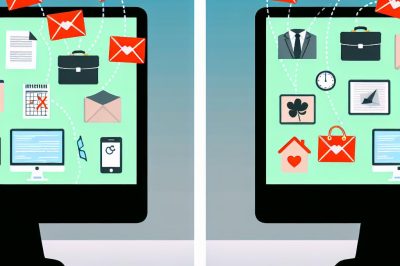
Maintaining separate email accounts for work and personal use offers a number of advantages that can contribute significantly to an individual’s overall digital management.
1. Work-Life Balance: By using separate email accounts for work and personal communications, individuals can ensure that work-related emails do not intrude during personal time. This delineation allows for a clear demarcation between professional responsibilities and personal engagements, promoting a healthier balance between work and leisure.
2. Privacy and Security: In an age where data breaches and cybersecurity threats are prevalent, keeping work emails separate from personal ones is vital for safeguarding sensitive information. Work emails often contain confidential data that, if compromised, could lead to significant security risks. By maintaining separate accounts, you minimize the exposure of personal data to threats that might arise from professional communications.
3. Improved Organization: Often, a large volume of emails can lead to confusion and ineffective communication. Segregating work and personal emails allows for better organization, making it easier to categorize and prioritize tasks. By having distinct baskets for each type of communication, individuals can quickly locate specific emails when necessary and manage their tasks more effectively.
Steps for Setting Up Separate Email Accounts
Setting up separate email accounts is an essential step towards effective digital management. The process is straightforward and can have lasting benefits.
Begin by choosing different email service providers for work and personal use. For instance, you might prefer using Gmail for personal emails due to its user-friendly interface and innovative features, while opting for Outlook for work communications, which is widely recognized for its professional collaboration tools. This distinction helps create a clear boundary between the two types of communications.
Moreover, using different passwords for each account is a crucial measure. Employing strong, unique passwords adds an additional layer of security. This simple step is effective in preventing unauthorized access to your accounts, thereby safeguarding your personal information.
The Role of Email Filters and Folders
Even with separate email accounts, organizing your emails efficiently is of utmost importance. Email filters and folders are powerful tools that aid in categorizing and managing emails.
Email filters can automatically sort incoming messages into folders based on criteria such as sender, subject, or keywords. For example, work-related emails can be further categorized into folders labeled “Projects” or “Meetings”. This systematization not only aids in maintaining an organized inbox but also facilitates the quick retrieval of specific emails.
Utilizing this strategy minimizes the time spent searching for crucial information, thereby enhancing overall productivity. By employing filters and folders, you can effectively manage the inflow of emails, maintaining a clutter-free digital environment.
Using Email Applications to Manage Accounts
The management of multiple email accounts can be simplified through the use of advanced email applications like Microsoft Outlook or Mozilla Thunderbird. These applications allow users to integrate multiple email accounts into a unified interface, streamlining the email management process.
With features that facilitate the viewing and responding to emails from different accounts, these platforms save significant time. This efficiency reduces the mental load associated with managing multiple accounts, allowing individuals to focus on important tasks without unnecessary distractions.
Moreover, many of these applications provide additional features such as scheduling emails, setting reminders, and integrating calendars, which further enhance productivity. By selecting the right email application, users can significantly simplify their communication processes, paving the way for a more organized digital experience.
Impact on Productivity and Stress Levels
Separating work and personal email accounts can have profound effects on both productivity and stress levels. When personal emails are received during work hours, they can become sources of distraction, pulling attention away from professional tasks. Conversely, receiving work-related emails during personal time can introduce unnecessary stress and impinge on relaxation.
By maintaining a clear boundary through separate accounts, individuals can focus better on their tasks. They can allocate specific times to check personal emails, thereby reducing distractions and enhancing focus during work. Simultaneously, keeping work emails at bay during personal hours helps maintain mental well-being by allowing for complete disengagement from professional stresses.
Maintaining this separation aids in creating defined schedules that support both productivity and restful personal time, ultimately cultivating a more balanced lifestyle.
Conclusion
In today’s perpetually connected world, the line between work and personal life is increasingly blurred. The effective management of digital communications is crucial for maintaining balance. Separating work and personal emails offers a practical solution to preserve this balance. By employing different email service providers, utilizing unique passwords, and leveraging email filters and folders, individuals can enhance their organizational skills. Moreover, integrating the use of applications that support multiple accounts further streamlines digital management.
This separation not only improves organization and productivity but also safeguards personal privacy. Embracing these practices empowers individuals to maintain clear boundaries between their work and personal lives. As the digital age progresses, such strategies are indispensable for enhancing one’s overall digital experience, ensuring that technology serves as a tool for better living rather than a source of unneeded stress.