
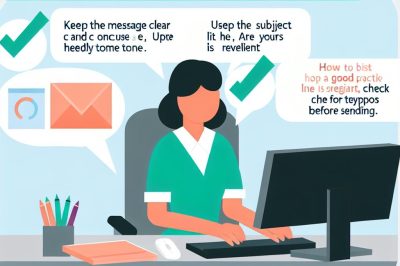
Understanding the Importance of Internal Emails
Internal emails serve as the backbone of effective communication within organizations. They are distinct from external emails, which are primarily aimed at client relations or public outreach efforts. Instead, internal emails focus on keeping the organization’s teams well-informed, aligned, and productive. By crafting emails that are both clear and concise, the process of disseminating information and minimizing misunderstandings among colleagues can be significantly enhanced. You can view more information by visiting this site.
Clarify Your Objective
Before you begin drafting an internal email, it is vital to first clearly define its purpose. Are you aiming to inform, request, or confirm something? Knowing this, clearly stated objectives are crucial as they help streamline the email’s content and ensure that the message is delivered effectively. Each email should focus on a single primary objective to avoid confusion.
Use a Descriptive Subject Line
The subject line of your email is your first opportunity to capture the recipient’s attention and convey the essence of your message. It should be descriptive enough to let the recipient understand the email’s content at a glance. For instance, replace vague subject lines like “Update” with more informative ones such as “Project X Completion Timeline Update.” This communicates the specific matter at hand, facilitating easier prioritization by the recipient.
KISS Principle: Keep It Short and Simple
Busy professionals often have limited time to read lengthy emails. Therefore, it is advisable to make your point succinctly and clearly. Break down your text into short paragraphs, and make use of bullet points where applicable to enhance readability. This way, the recipient can easily grasp the key points without wading through unnecessary details.
Adopt a Formal Yet Friendly Tone
Although internal emails tend to be less formal compared to external communications, it remains imperative to maintain professionalism. Use respectful language while infusing a friendly tone to encourage a positive work environment. Striking a balance between formality and friendliness can create a comfortable communication climate within the team.
Structure Your Email Logically
A logically structured email ensures that the recipient can easily follow the flow of information. Begin with the main message or request, and then support it with additional details. This strategy ensures that the key information is front-loaded, allowing the recipient to quickly understand what the email is about without having to sift through extraneous information.
Always Include a Call to Action, If Necessary
When your email requires a response or an action, be explicit about what you need and by when. Providing clear instructions and deadlines helps avoid any confusion and ensures timely follow-ups. Whether it’s a simple request for acknowledgment or a detailed task to complete, always clearly specify the expected outcome.
Proofread Before Hitting Send
Errors in spelling or grammar can severely undermine the professionalism of your email. Hence, it’s important to always take a moment to review your email for any potential mistakes before sending it. Useful tools like spell checkers or grammar assistants can be heavily relied upon to catch common errors and help maintain the email’s polished look.
Utilize Formatting for Emphasis
Formatting elements such as bold and italics are effective tools for drawing attention to the crucial parts of your message. However, it’s advisable to avoid over-formatting, as this can lead to a distraction from the central message you wish to communicate. Strike a balance to enhance clarity without overwhelming the recipient’s visual senses.
Know Your Audience
To maximize the effectiveness of your internal emails, it is important to adjust the content and tone based on your audience. For instance, a technical explanation might be necessary for a project team, while a high-level summary might suffice when addressing senior management. Understanding who your email is intended for allows you to tailor the message accordingly for better reception.
Hyperlink Relevant Resources
Where applicable, include links to relevant documents or resources that provide additional context or details. This practice minimizes email length while directing the reader to more comprehensive information. Ensure that your links are relevant and self-explanatory, guiding the recipient toward useful information effortlessly.
Ensure Timely Follow-Up
After sending an email, it’s prudent to follow up as needed. This might involve sending reminders before a deadline or checking in to confirm the receipt and understanding of the email’s contents. Follow-ups reinforce the importance of the initial communication and help keep all parties involved accountable to the outlined expectations.
By incorporating these strategies, employees can significantly enhance the clarity and effectiveness of their internal communications. Ultimately, effective internal emails contribute to improved workplace efficiency by ensuring that team members are on the same page and can collaborate more efficiently and effectively on projects.