
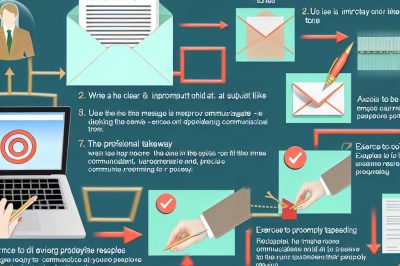
Understanding the Importance of Effective Email Communication
In the fast-paced environment of modern workplaces, email continues to be an indispensable tool for communication. Its ubiquitous use in professional settings magnifies the necessity for a thorough understanding of how to wield it effectively. When used correctly, emails have the power to dramatically enhance workplace productivity and nurture better team collaboration. However, miscommunication can arise when emails are unclear or poorly organized. Therefore, learning to communicate succinctly and clearly through email is essential.
Structuring Your Email for Clarity
A well-structured email eases the reading process and ensures that your messages are interpreted correctly. Begin your email with a clear and relevant subject line that provides an overview of the email’s purpose. A subject line acts as the email’s headline, giving the recipient an idea of what to expect before even opening the message. It’s akin to the cover of a book; well-crafted subject lines draw attention and set the stage for the content that follows.
To maintain clarity, utilize paragraphs to delineate different ideas or topics within the email. Each paragraph should be committed to a single point or concept. When drafting your message, try to keep your sentences concise and direct. Overly long or complex sentences might confuse the reader and obscure your main points. It’s crucial to convey your message using the fewest words necessary while still retaining clarity and completeness.
Utilizing Bullet Points and Numbered Lists
Though it is advisable to avoid excessive use of lists, the strategic employment of bullet points or numbered lists can be highly beneficial in emphasizing crucial information. Such elements naturally draw the reader’s attention to key details and effectively break up dense blocks of text, making the email more accessible. Bullet points serve as visual cues that can help to clarify and categorize content, offering a quick overview of complex or multifaceted information.
Maintaining Professional Tone and Language
Using professional language in email correspondence is imperative for maintaining respect and clarity. Avoid utilizing slang, overly casual language, or particular jargon that the recipient may not be familiar with. This is especially important when communicating across different sectors or cultural backgrounds. When emails involve complex or technical subjects, it is prudent to provide brief explanations or definitions of specific terms. This not only aids in comprehension but also demonstrates an awareness of the diverse knowledge levels of your audience.
Incorporating Clear Action Items
Embedding clear and actionable items within an email helps ensure the recipient comprehensively understands what is expected of them. Direct language that specifies what actions are being requested can significantly improve clarity. For example, instead of writing “Let me know your thoughts,” a more effective approach would be to say, “Please review the attached document and provide feedback by Friday.” This technique clearly outlines the task, deadline, and expectations, leaving little room for ambiguity.
Leveraging Technology for Greater Efficiency
Modern email platforms come equipped with a plethora of tools and features designed to enhance communication efficiency. These resources can be incredibly valuable when managing workflow and maintaining effective communication channels. Features such as scheduling emails to send at optimal times can ensure your message reaches recipients when they are most likely to engage. Utilizing read receipts to confirm message receipt can also be instrumental in tracking communication flow. Furthermore, employing templates for frequently sent messages can save significant time, allowing you to focus on crafting quality responses for unique conversations. By effectively leveraging these technological advancements, you can enhance both the efficiency and efficacy of email communication.
Utilizing Email Signatures Wisely
The email signature is an important aspect of professional communication. It provides recipients with essential contact information and adds a professional touch to your correspondence. A conventional email signature typically includes your name, position, company name, and direct contact information. It’s important to avoid cluttering the email signature with excessive information or graphic elements that do not contribute to the recipient’s ability to navigate subsequent communications.
Reviewing and Editing Your Emails
Before sending any email, proofreading for spelling, grammar, and punctuation errors is crucial. Typos and grammatical mistakes can severely undermine the professionalism of your communication, potentially leading to misunderstandings. Reading your email aloud can also be helpful in identifying awkward phrasing or unclear ideas, offering an opportunity to refine and enhance your message. For further insights into effective workplace communication, consider visiting the Mind Tools website, which offers an array of resources and articles on related topics.
By mastering the art of effective email communication, you can significantly strengthen your ability to convey information clearly and professionally. This brings notable improvements in collaboration and productivity within the workplace. As we increasingly depend on digital communication, honing our email skills is critical in maintaining successful professional relationships and ensuring efficient operations. Understanding the dynamics of email communication empowers us to communicate effectively, helping to facilitate seamless interaction within professional environments.